ZAMBIA TAKES A HISTORIC STEP AS THE MINISTRY OF HEALTH AND PARTNERS LAUNCH THE MALARIA VACCINE.

Rising Through the Ranks: The Inspiring Path of Paul Somwe at CIDRZ.
October 27, 2025
Dr Guy Muula’s Journey in Advancing Public Health and Research.
November 3, 2025ZAMBIA TAKES A HISTORIC STEP AS THE MINISTRY OF HEALTH AND PARTNERS LAUNCH THE MALARIA VACCINE.

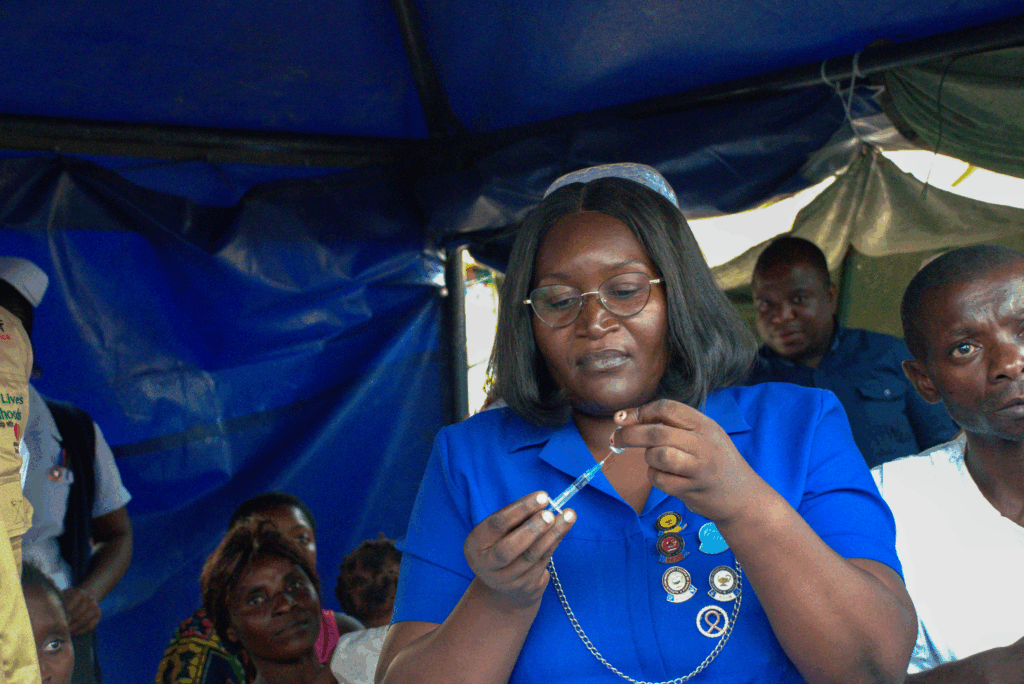
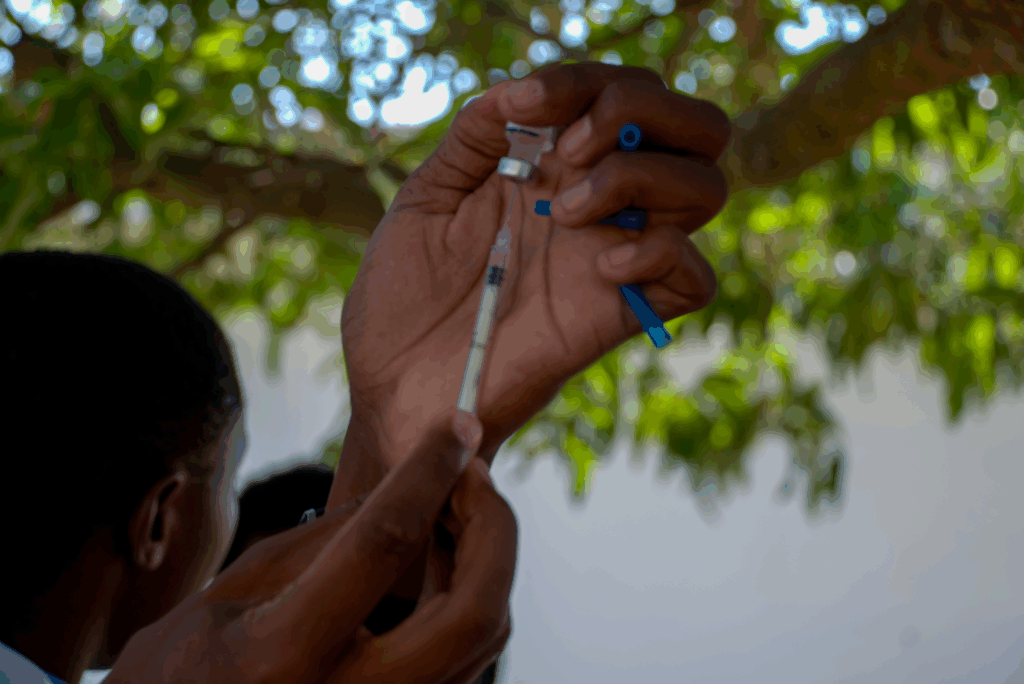
The Ministry of Health(MOH), in collaboration with its partners, has marked a historic milestone in the fight against malaria with the official launch of the malaria vaccine under the Expanded Programme on Immunisation (EPI).
The vaccine targets children aged six to eight months and will be administered in a four-dose schedule. In support of this national rollout, CIDRZ, through its Primary Care and Health Systems Strengthening (PC/HSS) Department, provided technical assistance to MOH EPI from planning to vaccine introduction.
Furthermore, CIDRZ supported all 83 districts in conducting outreach activities, complementing government efforts and those of other implementing partners.
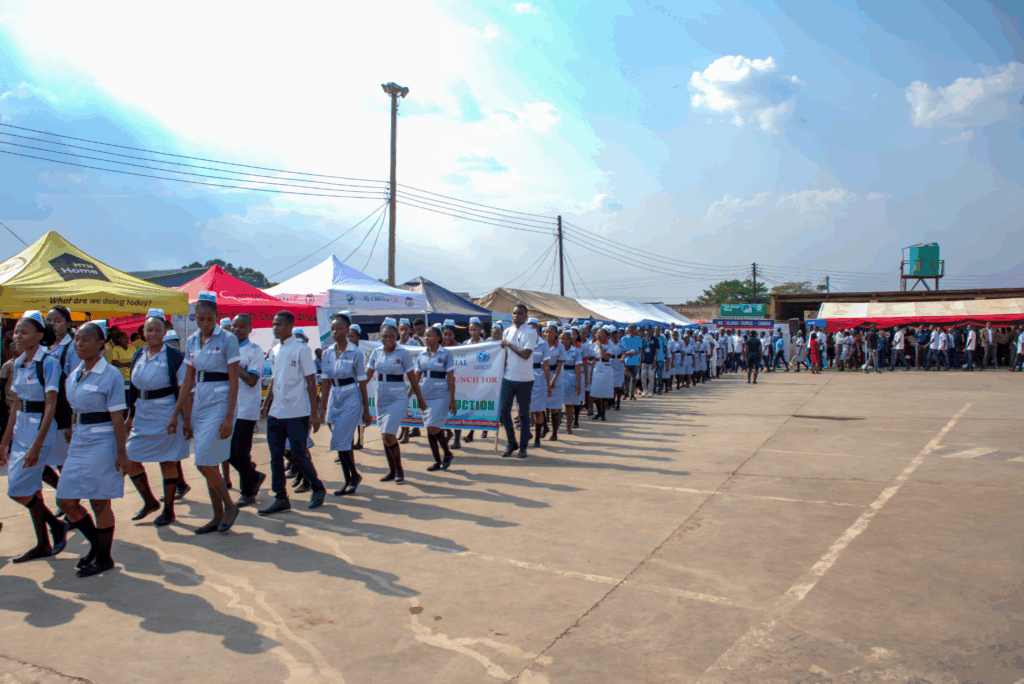
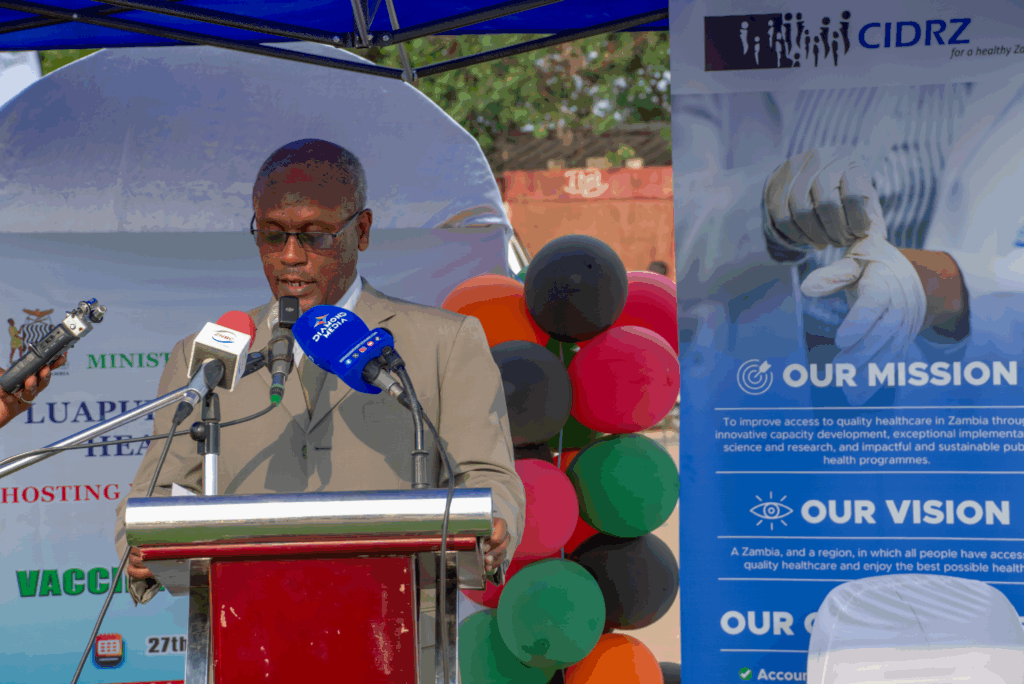
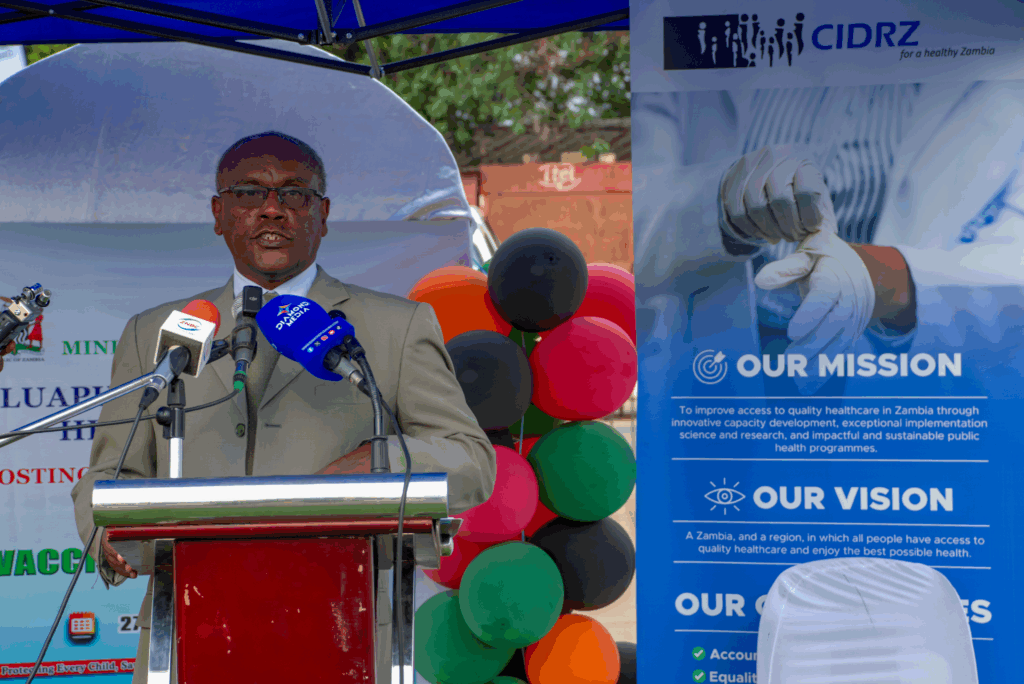
The launch of the Malaria Vaccine, held in Mansa, Luapula Province, brought together senior government officials, implementing partners, traditional leaders, civil society organisations, and the media, marking a major milestone in Zambia’s public health efforts.
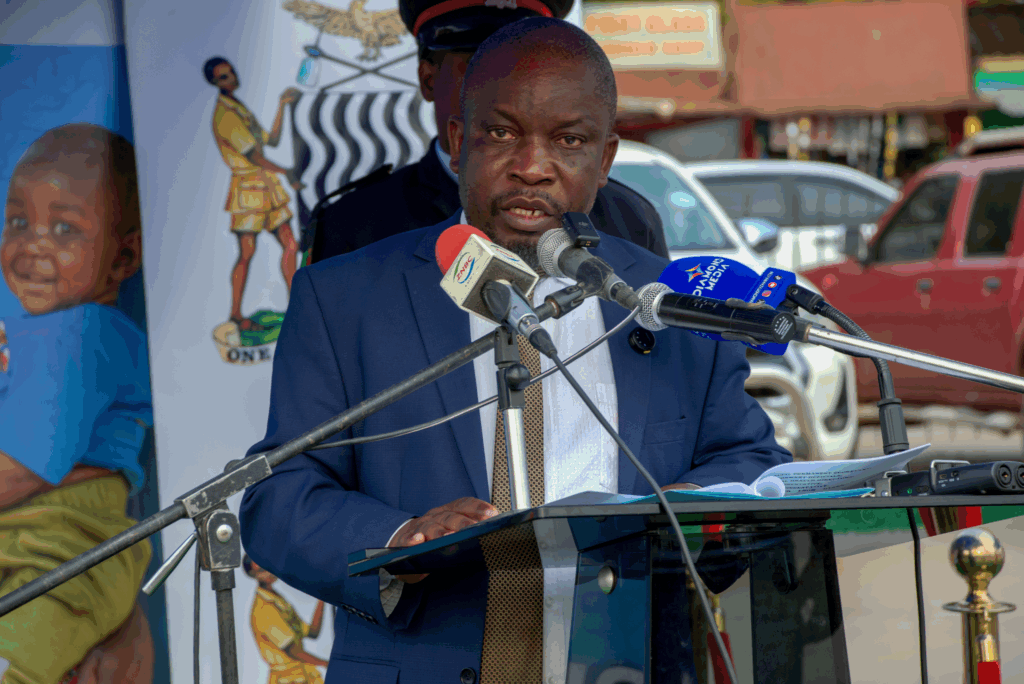
During the launch, Minister of Health, Dr Elijah Muchima, emphasised that malaria remains one of the leading causes of illness and death in Zambia, particularly among children under the age of five.
“Over 30,000 people contract malaria every year, and at least one person dies from the disease every day. It also ranks among the top ten causes of hospitalisation, especially among children and pregnant women,” he said.
Dr Muchima, who was represented by Luapula Province Minister, Mr Nason Musonda, reaffirmed the government’s commitment to leadership and collaboration in the fight against malaria, emphasising that the introduction of the vaccine is a clear demonstration of this resolve.
He explained that the vaccine rollout will follow a phased approach, starting with 83 selected districts across nine provinces with moderate to high malaria incidence. Initially, low-incidence areas, such as Southern Province, will not be included in the first phase.
Meanwhile, UNICEF Zambia Chief of Health, Dr Atnafu Getachew Asfaw, acknowledged that introducing a new vaccine comes with several challenges.
However, he noted that resources have been mobilised through Gavi, the Vaccine Alliance, to help the government implement the programme effectively.
Dr Asfaw reaffirmed UNICEF’s commitment to continued collaboration, pledging sustained support for the government and other partners in both advocacy and implementation to ensure the initiative’s success.
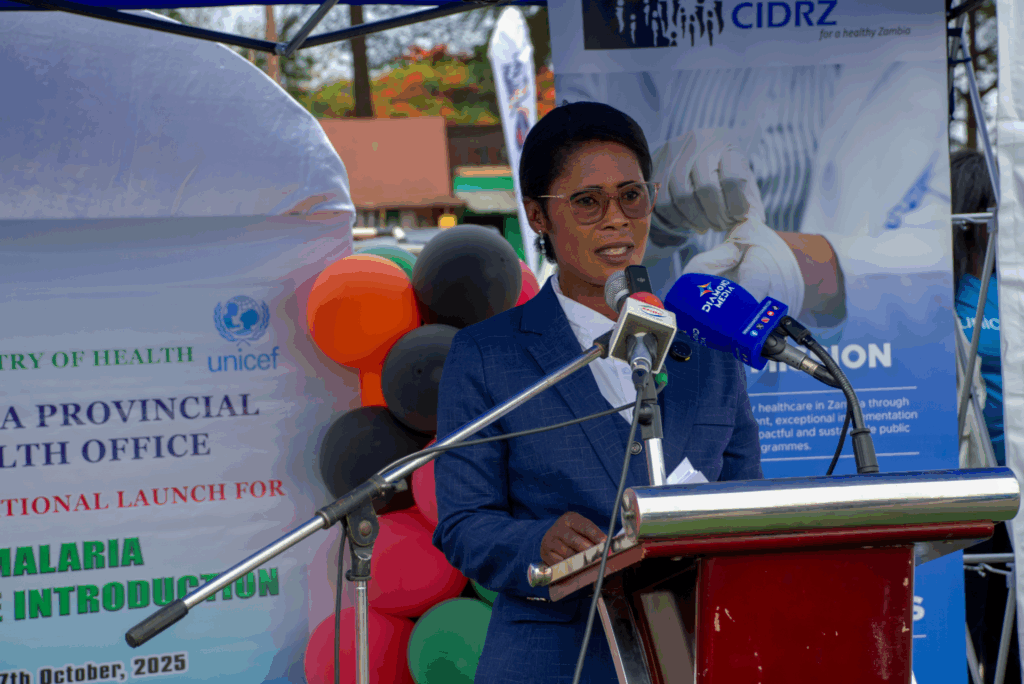
And Mansa District Commissioner Ms Ireen Chibweta commended the collective efforts of all stakeholders.
“Through close collaboration between the government, traditional leaders, health workers, and cooperating partners, we shall ensure that this vaccine reaches every eligible child. This vaccine is indeed a game changer, and together, we can make malaria a disease of the past,” she said.
Ms Chibweta further stressed that the malaria vaccine will supplement, not replace, existing prevention measures, such as the use of insecticide-treated bed nets, indoor residual spraying, accurate diagnosis, and effective treatment.
Adding to the remarks, Mr Yoram Siame, Director of Planning and Development at the Churches Health Association of Zambia (CHAZ), stated that the malaria vaccine aligns perfectly with the Zambia Malaria Elimination Strategy 2022–2026, which envisions zero malaria deaths and the eventual eradication of the disease.
“The malaria vaccine adds a powerful layer of protection for our most vulnerable, our children. It complements, and does not replace, other interventions such as insecticide-treated nets and indoor spraying,” Mr Siame reiterated.
The launch of the malaria vaccine marks a major milestone in Zambia’s long-standing battle against malaria. It serves as both a scientific breakthrough and a symbol of the country’s national commitment to safeguarding the health of its youngest citizens, paving the way towards a healthier, more resilient, and malaria-free future.