Ministry of Health, UN Agencies and Partners Convene 2025 National HIV Prevention Symposium in Lusaka.

Zambia Launches 2025 HIV Prevention Symposium to Accelerate, Sustain, and Innovate HIV Response
November 26, 2025
CIDRZ Highlights Progress in Scaling Up PrEP for Pregnant and Breastfeeding Women at 2025 National HIV Prevention Symposium
November 28, 2025Ministry of Health, UN Agencies and Partners Convene 2025 National HIV Prevention Symposium in Lusaka.

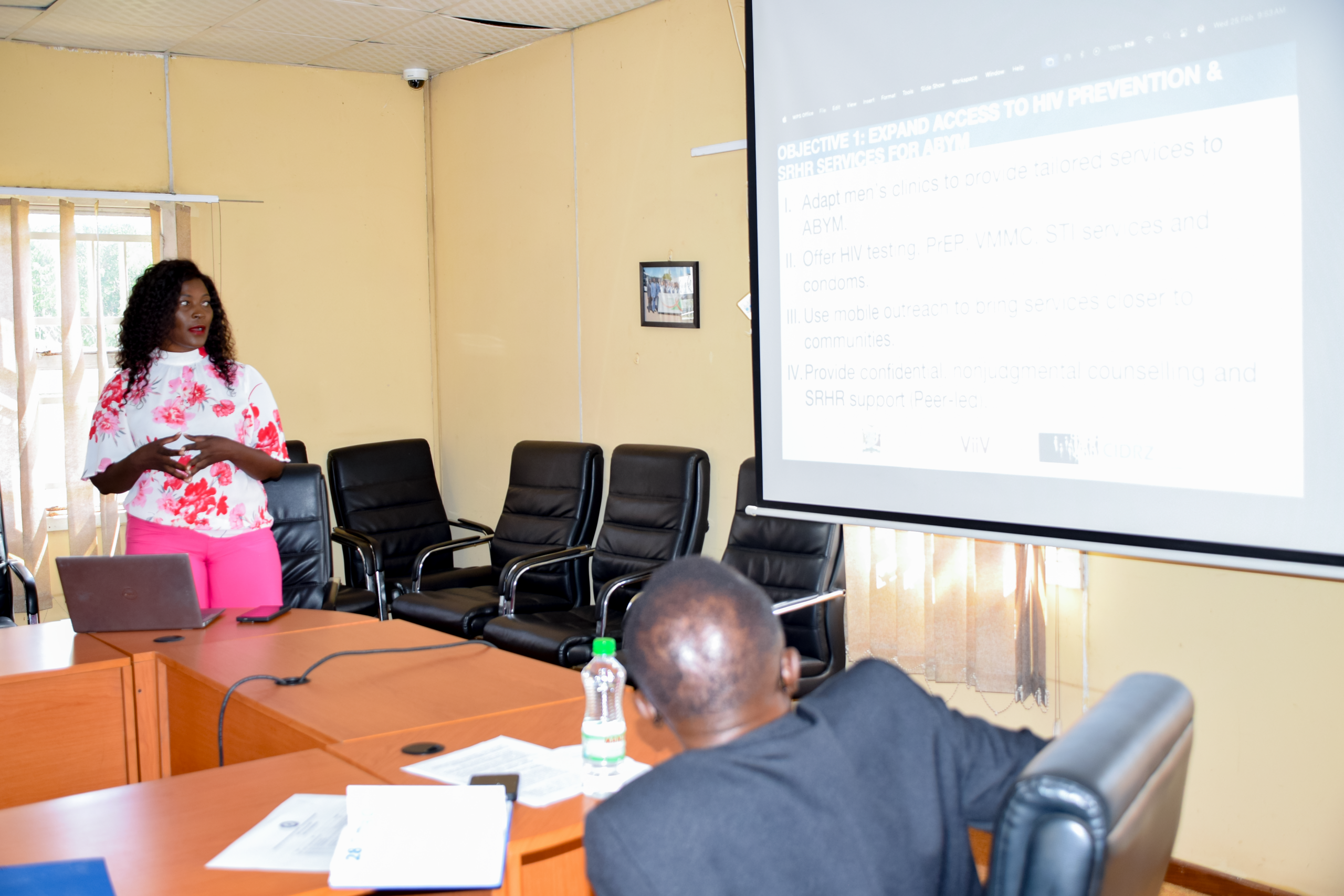
The Ministry of Health (MOH), through the National HIV/AIDS/STI/TB Council (NAC), in collaboration with the United Nations in Zambia through UNAIDS and UNFPA, Evidence Action, and several other partners, has convened the 2025 National HIV Prevention Symposium from 26 to 27 November in Lusaka.
The event is being held under the theme “Accelerating, Sustaining, and Innovating HIV Prevention in a Rapidly Changing Global Landscape.”
The symposium brings together government officials, researchers, development partners, civil society organisations and youth representatives to reflect on emerging HIV prevention challenges and explore innovative ways to strengthen integrated responses.
It aims to accelerate Zambia’s efforts towards ending HIV as a public health threat, particularly in light of shifting global health priorities and evolving prevention needs.
The Centre for Infectious Disease Research in Zambia (CIDRZ) is among the organisations participating at the event, showcasing various programmes contributing to the country’s HIV prevention and research agenda.
During the symposium, CIDRZ’s Dr Natalie Vlahakis delivered a presentation on ongoing research aimed at optimising the implementation of long-acting injectable Cabotegravir (CAB-LA) for HIV pre-exposure prophylaxis (PrEP) among adolescents, young adults, and healthcare workers in Zambia.
Long-Acting Injectable PREP-is widely recognised as a promising innovation, especially for adolescents and young adults who often face challenges with daily oral PrEP.
Dr Vlahakis’s presentation highlighted findings from a multi-phase study exploring Zambia’s readiness to adopt CAB-LA.
The first phase examined the country’s existing oral PrEP and youth-friendly service delivery structures.
Through a review of national policies and programme documents, supported by ethnographic observations across 28 health and youth service sites, the study found that Zambia already has several strong foundations for CAB-LA rollout.
These include active peer counselling, escorted referrals, continuing support groups and the integration of PrEP information within broader sexual and reproductive health services. However, challenges such as weak electronic data systems, inconsistent commodity supplies and limited interaction time between providers and clients during peak clinic hours may undermine the effective delivery and continuity of CAB-LA if left unaddressed. The study recommends strengthening client tracking systems, improving supply chain reliability and expanding task-shifting to allow more time for high-quality counselling.
The second phase of the study focused on the preferences and concerns of adolescents, young adults and healthcare workers.
A mixed-mode survey conducted in Lusaka and Chongwe districts revealed that adolescents value being well informed about CAB-LA, prioritise safety and physical effects, and are concerned about the reliability of injections and distance to health facilities.
Parental support also emerged as an important factor influencing their decision-making. Interestingly, shorter clinic waiting times and peer influence were ranked as less important considerations. Healthcare workers, on the other hand, expressed a strong preference for practical tools such as materials in local languages, visual job aids and regular peer discussion platforms.
They demonstrated limited interest in passive digital learning tools and raised concerns related to stigma and fears about increased risk behaviour among young people. The study concluded that while adolescents prioritise knowledge, safety and accessibility, healthcare workers depend heavily on context-specific tools and require stigma-related support to provide effective counselling and service delivery.
To strengthen acceptability and uptake, the study recommends the development of youth-friendly educational materials, enhanced engagement of parents and guardians, and the provision of tailored communication tools for healthcare workers.
The third phase of the study is ongoing and involves the use of findings from the earlier phases to inform a multi-day implementation mapping workshop.
This workshop brings together adolescents, caregivers, healthcare workers, policymakers and other stakeholders to co-develop and prioritise strategies for Long-Acting Injectable PREP-implementation. The finalised strategies are expected to highlight feasible, acceptable and scalable approaches that align with existing health system capacity while ensuring long-term persistence on Injectable PrEP. Central to this process is the inclusion of youth voices to ensure that policies and programmes reflect their lived realities and prevention needs.