Bringing TB Services Closer to Communities.

CIDRZ Supports Youth-Led Dialogue at the 2026 Lusaka Provincial Adolescent Health Indaba
July 17, 2026
CIDRZ, CDC Foundation and Partners Strengthen Zambia’s IDSR System.
July 24, 2026
The Facility for Community-based Service Delivery and Support (FC‑SDS) project, in collaboration with the Ministry of Health (MoH), is strengthening tuberculosis (TB) services across eight provinces: Lusaka, Copperbelt, Central, Southern, Northern, North Western, Muchinga, and Luapula. The project combines community‑based approaches with health system strengthening to expand equitable access to TB services, particularly for underserved populations.
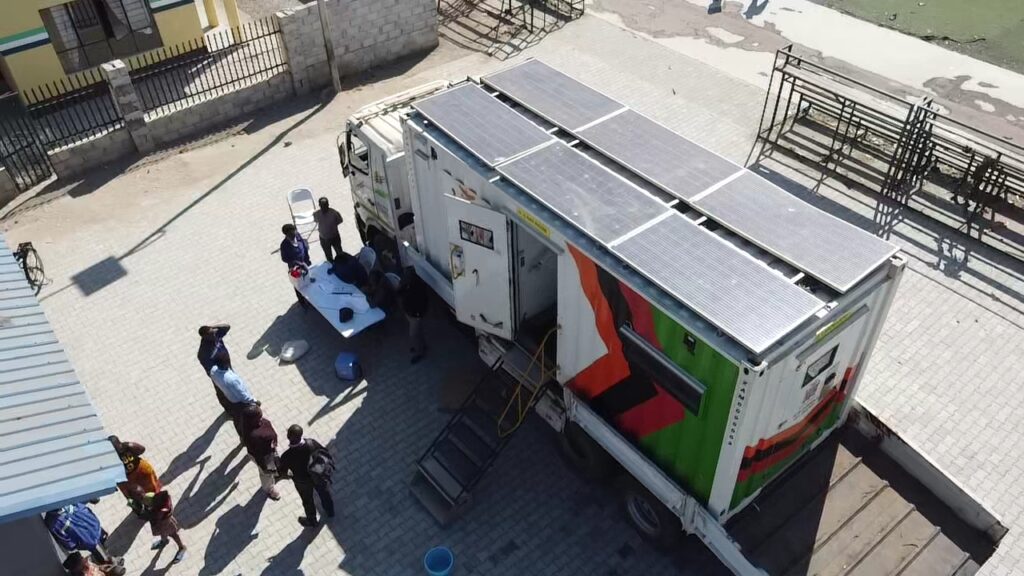
As part of this broader effort, the FC‑SDS project is supporting the deployment of three mobile TB screening trucks in Lusaka, Copperbelt, and Southern Province. These trucks are a key enhancement of the project’s strategy, bringing integrated screening and diagnostic services directly into communities where access to health facilities is limited.
FC‑SDS Mobile Screening Coordinator Mr Robert Hambwalula explained that the trucks are designed to provide immediate, comprehensive services in one setting. Equipped as fully functional mobile clinics, they offer on‑site chest X‑ray screening, immediate clinical review, and same‑day sputum collection and testing. Individuals diagnosed with TB are initiated on treatment immediately.
“This community‑based approach improves early case detection and ensures timely access to treatment,” he said.
The mobile units complement other core components of the FC‑SDS project, including facility‑based fast‑track TB screening, inpatient screening, and strengthened diagnostic systems.
By extending these services beyond health facilities and into communities, the trucks help bridge critical gaps between community screening and treatment initiation, one of the key challenges identified by the Ministry of Health.
During a recent outreach in the Sakubita community in Livingstone District, the MoH District Health Office TB Coordinator, Ms Mwembe Samboko, highlighted the initiative’s impact. She noted that the mobile screening truck brings essential services closer to people who would otherwise face barriers such as distance, cost, and limited awareness.
“The truck functions as a fully equipped mobile clinic, offering integrated TB screening and diagnostic services in one location,” she said.
Community members received chest X‑ray screening, laboratory diagnosis, and treatment, with clinicians reviewing results immediately to guide care.
Beyond mobile outreach, the project has engaged 1,120 community‑based volunteers who play a central role in strengthening TB service delivery. These trained community health workers support active case finding, contact tracing, linkage to care, and patient follow‑up to improve treatment adherence and outcomes. Their work ensures that individuals identified through community activities, including mobile screenings, are effectively connected to care and supported throughout treatment.
According to the Chief of Party, Dr Mary Kagujje, the FC‑SDS project aligns closely with national priorities to expand equitable access to TB services in both public and correctional facilities. The project directly addresses key challenges, including low case detection rates, limited diagnostic capacity, and weak linkages between community screening and treatment initiation.
At the facility level, the project strengthens services through fast‑track screening desks, improved laboratory capacity, equipment optimisation, and enhanced data systems. During a recent engagement in Lusaka, TBLON Regional Medical Officer Dr David Singini emphasised the importance of collaboration with facility leadership to sustain quality TB services, noting that continued capacity building for health workers is essential for improving patient outcomes.
By integrating mobile outreach, community engagement, and strengthened facility systems, the FC‑SDS project is improving early detection, reducing delays in treatment initiation, and limiting ongoing TB transmission. The mobile screening trucks, as a key enhancement of this integrated approach, are playing a critical role in extending lifesaving TB services directly to communities.
The FC‑SDS project is implemented by the Centre for Infectious Disease Research in Zambia (CIDRZ) with funding from the United States Government through the Stop TB Partnership.