
ZNPHI and CIDRZ Validate Zambia’s One Health Digital Landscape Assessment
November 6, 2026
Every day, nurses, clinicians, cleaners, and support staff at the University Teaching Hospital (UTH) Multi Drug‑Resistant Tuberculosis (MDR‑TB) Ward enter an environment where the risk of airborne transmission of MDR-TB is significantly higher than in ordinary hospital wards.
MDR‑TB is a severe form of tuberculosis that does not respond to standard first‑line medicines, requiring longer treatment, stronger drugs, and close clinical monitoring. Because MDR spreads easily through the air when a person with MDR coughs, speaks, or even breathes, the ward must uphold strict infection‑prevention measures to protect patients, visitors, and the healthcare workers who care for them. In this setting, strong infection‑control systems are helpful and lifesaving.
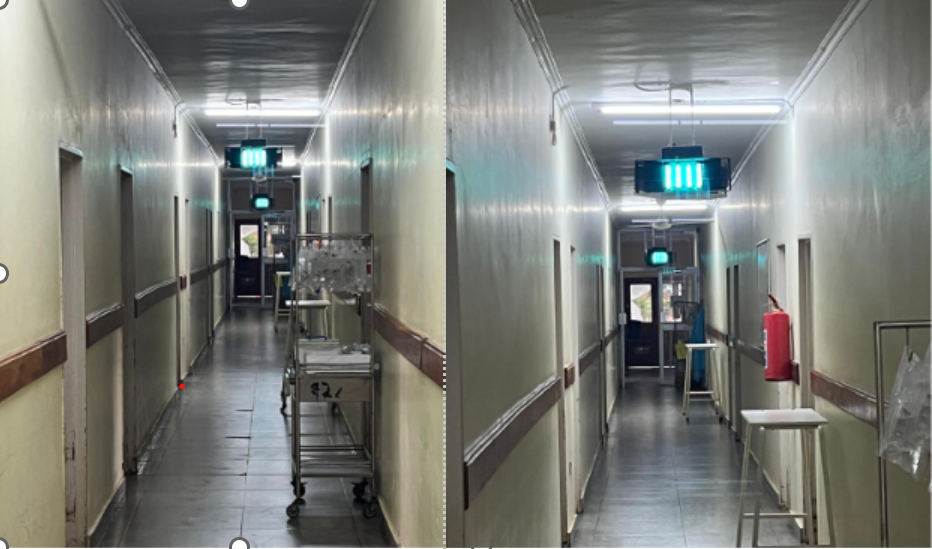
Through the Facility and Community‑based Service Delivery and Support (FC‑SDS) Project, implemented by the Centre for Infectious Disease Research in Zambia (CIDRZ) with support from the United States Government through the Stop TB Partnership in support of the Ministry of Health (MoH), the UTH MDR-TB ward received targeted assistance to restore its Ultraviolet Germicidal (UVG) system, which had not been functioning for months. The project replaced 44 Germicidal TUV PL‑S 9W/4P globes at a cost of K50,400, bringing the entire system back to full functionality.
With the lamps restored, the ward once again benefits from continuous air disinfection, an invisible but powerful shield that reduces airborne TB transmission and strengthens the safety of the clinical environment.
Expressing gratitude for the assistance, UTH Nursing Officer‑in‑Charge Sr. Tangu Mwanamoonga Mwape explained that the MDR‑TB Ward is one of Zambia’s most critical treatment centres for patients battling this dangerous form of tuberculosis.
“We work in close proximity to highly infectious patients, often for long hours and under challenging conditions,” she said.
Sr. Tangu added that without a functioning UVG system, the air inside the ward becomes less safe, increasing the risk of exposure for healthcare workers and placing vulnerable patients, such as those with weakened immune systems, at even greater risk.
The prolonged breakdown of the system strained infection‑prevention efforts and heightened anxiety among staff who understood the dangers of working without adequate airborne protection.
FC‑SDS Deputy Chief of Party Dr Phallon Mwaba highlighted the vital role the UVG system plays in reducing these risks.
“UV‑light is used to kill airborne pathogens, including TB bacteria. It disinfects the air as it circulates naturally through the room. When operating properly, it continuously lowers the concentration of infectious particles, creating safer air for everyone in the ward,” he said.
And FC‑SDS MDR‑TB Coordinator Mr Marshal Sikandangwa added that the impact of the support extends far beyond the hospital walls.
“By reducing the likelihood of MDR‑TB transmission within the facility, the intervention helps protect families, communities, and the broader health system,” he said.
UVG systems are recognised globally as a cost-effective way to prevent airborne transmission in MDR-TB treatment settings. For the staff who spend long hours on the ward, the restored lamps mean they can focus on patient care, knowing the air around them is working in their favour.
The support from the FC-SDS Project, implemented by CIDRZ, demonstrates how a modest, targeted investment can keep one of Zambia’s most critical TB wards safe and protect those who work in it.