TB Peers: Champions at the Frontlines of Zambia’s Fight to End Tuberculosis by 2030.

CIDRZ and CNRS Successfully Conduct Advanced Immunology Training in Zambia.
September 2, 2025
Turning the Tide Against Tuberculosis, One Register Entry at a Time.
September 3, 2025
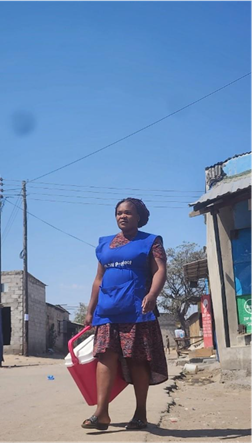
In the quest to eliminate tuberculosis (TB) by 2030, the Ministry of Health (MoH) has placed TB Peers at the heart of the response. These are trained community members who have either experienced TB themselves or are deeply committed to the fight against it. Drawing on their personal journeys, TB Peers provide emotional support, practical guidance, and encouragement to patients and families, helping to improve treatment adherence, reduce stigma, and build stronger community support systems.
Supporting this national effort, the US government–funded Tuberculosis Local Organisations Network (TBLON), implemented by the Centre for Infectious Disease Research in Zambia (CIDRZ), has been instrumental in training, deploying, and mentoring TB Peers. Through TBLON partners, CITAM+ and Afya Mzuri, peers are now active in eight of Zambia’s ten provinces, bridging the health system and communities.
One such Peer is Gift Mugala, a single mother of six, who works from the TB tent at George Clinic in Lusaka’s George Compound. Her day begins with prayer before she sets out to serve her community.
“Our TB tent is the first stop for people with symptoms like coughing, fever, or night sweats,” she explains. “After seeing patients at the clinic, I go into the community to visit households, encourage people to get tested, and support patients to stay on treatment. I also encourage family members of TB patients to take preventive treatment.”
Gift’s compassion is matched by her determination. She knows that every person she counsels and every household she visits brings Zambia one step closer to ending TB.
In Mazabuka, Thelma Mweemba shares a similar passion. Having survived TB herself, she now uses her story to inspire others.
“I know what it feels like to be afraid of the cough, to hide from neighbours, and to wonder if you’ll ever get better,” she says. “That’s why when I speak, people listen—they know I’ve lived it.”
Equipped with sputum collection kits and referral slips, TB Peers conduct door-to-door case finding in high-burden communities. Where health facilities are far away, they collect samples directly from households and ensure they are tested at nearby clinics. They identify people with TB symptoms, accompany them to health facilities, and follow up to make sure treatment is completed. Their efforts have led to earlier diagnoses, better treatment outcomes, and reduced stigma across communities.
Yet their role goes beyond case finding. TB Peers are educators, advocates, and storytellers. Through community dialogues, school visits, market sensitisations, and even drama and song, they weave TB education into everyday life—breaking down myths and sparking conversations that challenge stigma.
Working within their communities, TB Peers engage neighbours, friends, and family members with messages of hope and resilience. Their lived experiences are not just memories of survival but powerful tools for advocacy, transforming them into trusted voices for change.
As Zambia advances towards its 2030 target, the contribution of TB Peers has never been more critical. Their dedication demonstrates that sustainable progress in public health is achieved in hospitals or laboratories and in the streets, markets, and homes where communities come together.
The work of TB Peers is more than service, it is proof of the strength of community-led solutions in the fight to end TB.