CIDRZ, MoH Launch RISE Zambia Alliance to Strengthen HIV Response
CIDRZ, DFMS and U.S Government Partner to Strengthen HIV Prevention Through PrEP Training in Defence Health Facilities
April 14, 2026
CIDRZ Showcases Innovation and Research at RDAZ AGM 2026 in Siavonga.
April 16, 2026
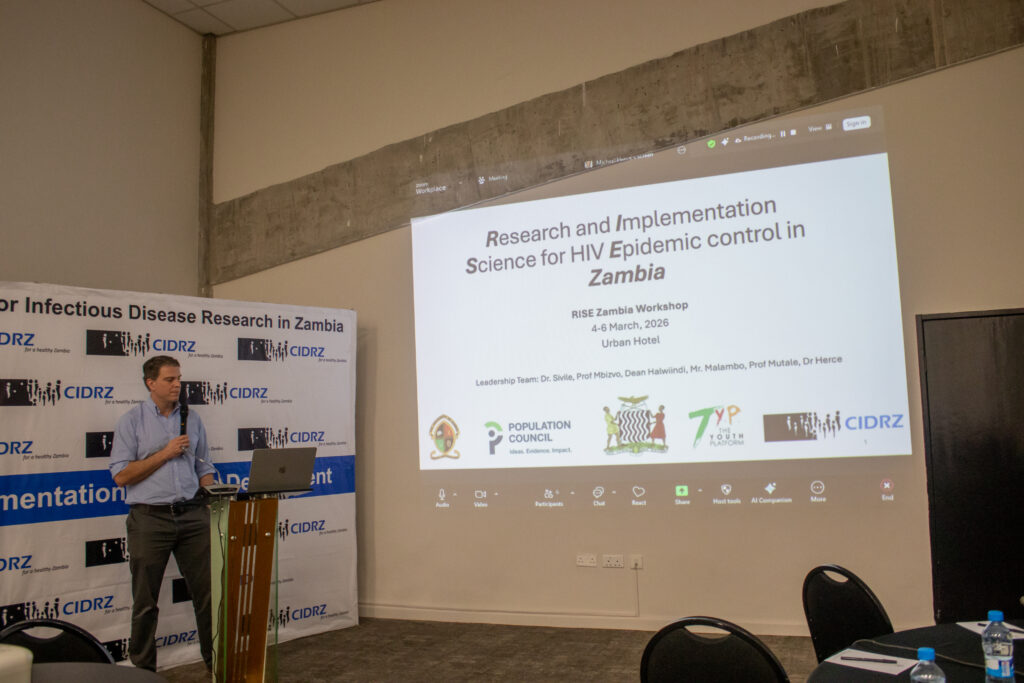
The Centre for Infectious Disease Research in Zambia, in collaboration with the Ministry of Health and key partners, has secured funding from the National Institutes of Health to implement the Research and Implementation Science for HIV Epidemic Control in Zambia (RISE Zambia) Alliance.
The alliance was recently launched in Lusaka during a stakeholder workshop that brought together government officials, researchers, civil society organisations, and technical partners. The meeting focused on aligning priorities and strengthening the use of implementation science to improve national HIV programming.
The RISE Zambia Alliance aims to support evidence-based decision-making and accelerate Zambia’s progress toward achieving HIV epidemic control by 2030. While the country has made notable strides toward the UNAIDS 95-95-95 targets, challenges remain in translating scientific evidence into effective policies and scalable health programmes.
Despite the availability of proven interventions for HIV prevention, treatment, and care, stakeholders acknowledged persistent gaps in adapting these solutions to local contexts and implementing them efficiently at scale. A major limitation has been the absence of a coordinated national platform that brings together researchers, policymakers, implementers, and communities to apply implementation science in a unified manner.
Implementation science focuses on identifying practical strategies to deliver proven health interventions effectively in real-world settings. The RISE Zambia Alliance has been established to fill this gap by strengthening collaboration and accelerating the integration of research findings into national HIV policies and programmes.
Speaking during the workshop, Dr Suilanji Sivile, National HIV Technical Advisor at the Ministry of Health, emphasised the alliance’s role in creating a collaborative learning platform. She noted that the initiative will help map ongoing implementation science research, identify priority thematic areas, and improve coordination among stakeholders.
Dr Michael Herce, Implementation Science Director at CIDRZ, highlighted the importance of leveraging existing networks.
“The project will ensure that locally generated evidence directly informs the sustainable scale-up of proven HIV interventions,” Dr Herce said.
Meanwhile, Dr Hikabasa Halwiindi, Dean of the School of Public Health at the University of Zambia and Director of the Implementation Science Centre for Advancing Practice and Training (IMPACT), underscored the need to strengthen local research capacity and promote knowledge sharing to enhance both evidence generation and its application.
The workshop featured presentations on ongoing implementation science projects, panel discussions on lessons learned, and consultations with communities to align research priorities with national needs.
A key outcome of the meeting was the establishment of a Dissemination and Implementation Science (DIS) Sub-Technical Working Group under the National HIV Technical Working Group. The sub-group will provide guidance to the Ministry of Health on priority areas and oversee the integration of implementation science into the national HIV response.
Participants also developed a national roadmap to guide implementation science activities. The roadmap will support the identification of programme challenges, sustainability threats, and opportunities for innovation within the national HIV programme.
The RISE Zambia Alliance is expected to play a critical role in ensuring that effective HIV prevention and treatment strategies reach more people across the country, while strengthening national ownership and long-term sustainability of Zambia’s HIV response.

Related posts
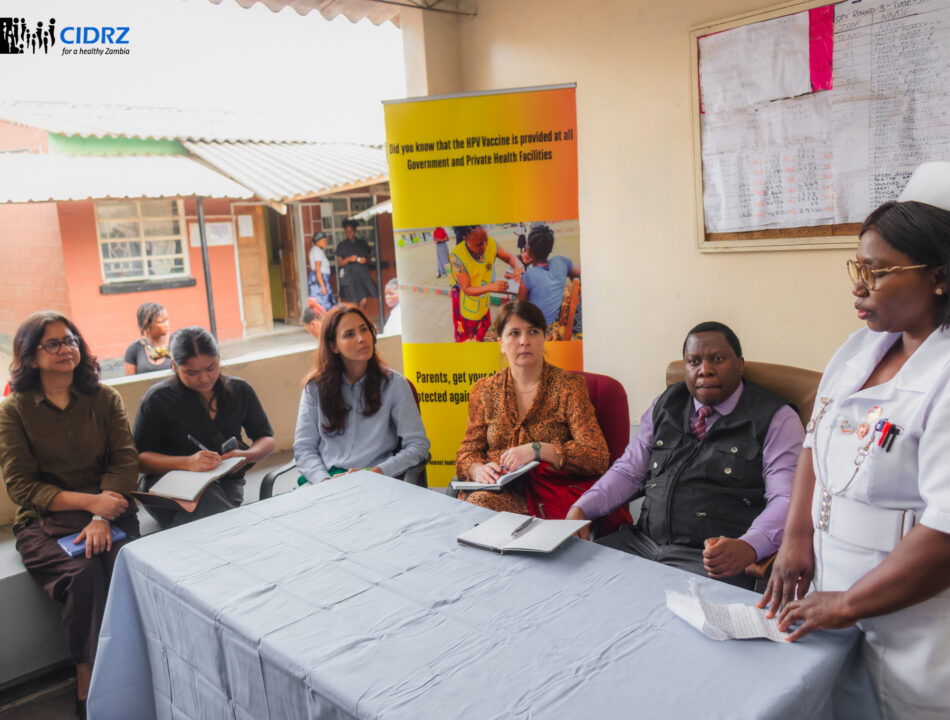
The Gavi delegation, led by Senior Country Manager Jamilya Sherova, joined the national Expanded Programme on Immunisation (EPI) team, led by Dr Jacob Sakala, as they listened to a briefing from the Ngombe Urban Health Centre Medical Superintendent during a visit to observe immunisation service delivery.