CIDRZ Joins Regional Leaders in Planning for the Rollout of Next-Generation TB Vaccines.

CIDRZ Partners with Levy Mwanawasa University to Launch a New Clinical Trial to Evaluate Promising New Cholera Vaccine Candidate.
July 14, 2026
CIDRZ Supports Youth-Led Dialogue at the 2026 Lusaka Provincial Adolescent Health Indaba
July 17, 2026
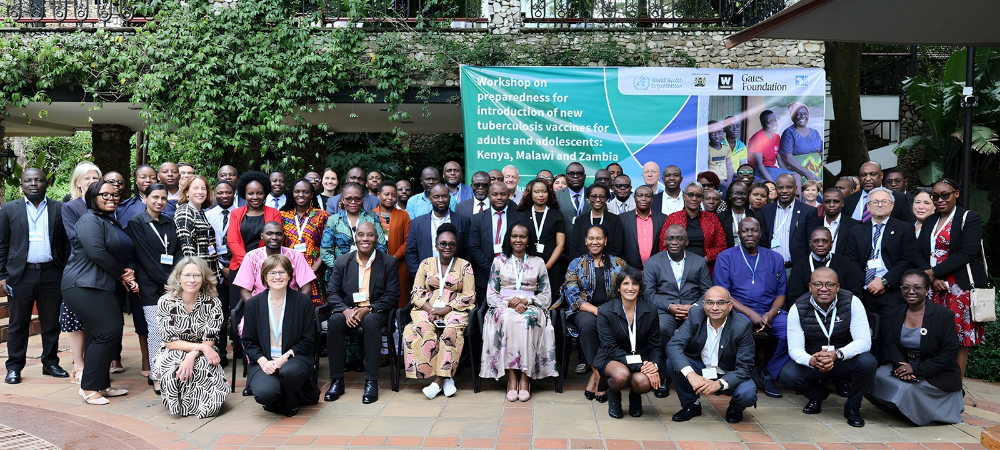
The Centre for Infectious Disease Research in Zambia (CIDRZ) is working alongside the Government of the Republic of Zambia to accelerate the country’s preparedness for the introduction of next-generation tuberculosis (TB) vaccines, reinforcing Zambia’s commitment to ending one of the world’s deadliest infectious diseases.
This commitment was reaffirmed during a high-level regional workshop convened by the World Health Organization (WHO) in Nairobi, Kenya, from 3–5 June 2026, where CIDRZ Chief Scientific Officer, Dr Monde Muyoyeta, joined senior Ministry of Health officials and more than 80 TB vaccine experts, policymakers, researchers, and partners from Kenya, Malawi, and Zambia.
The workshop focused on strengthening national readiness for the potential rollout of new TB vaccines currently in late-stage clinical development. According to WHO, Kenya, Malawi, and Zambia are among the leading countries preparing for the introduction of a new generation of TB vaccines that could significantly reduce the global burden of the disease. WHO estimates that a vaccine with just 50% efficacy could prevent up to 76 million new TB cases and 8.5 million deaths over the next 25 years.
Opening the meeting, Dr Neema Rusibamayila Kimambo, WHO Representative for Kenya, underscored the urgency of accelerating vaccine preparedness.
“Tuberculosis remains a significant challenge in Africa, causing approximately 2.5 million people to fall ill and over 400,000 deaths each year,” she said.
Representing Zambia’s scientific leadership, Dr Muyoyeta highlighted the importance of early planning and collaboration to ensure countries are ready once new vaccines receive regulatory approval.
“The workshop provided updates on the most advanced TB vaccine trials and facilitated discussions on priority populations, delivery strategies, evidence needs for national adoption, regulatory pathways, and lessons learned from recent vaccine introductions such as COVID-19 and malaria,” she said.
She added that the workshop aligns with CIDRZ’s longstanding leadership in tuberculosis research, surveillance, implementation science, and vaccine preparedness, positioning the organisation as a key partner in Zambia’s national TB response.
During the meeting, Zambia, Kenya, and Malawi identified several priority actions to strengthen readiness for TB vaccine introduction. These include developing country-specific vaccine introduction roadmaps, establishing multi-sector technical working groups to coordinate planning across TB, immunisation, regulatory, and financing systems, and engaging civil society and faith-based organisations to promote public awareness and equitable access.
The participating countries also emphasised the importance of securing resources to support implementation research, operational planning, and modelling studies needed to inform national policy decisions and regulatory processes.
Participants agreed that successful introduction of future TB vaccines will require early integration into national TB control and immunisation programmes while ensuring implementation strategies reflect each country’s health system capacity, policy environment, and community needs.
For Zambia, this means aligning future TB vaccine deployment with the National TB Strategic Plan, the Expanded Programme on Immunisation (EPI), parliamentary engagement, and ongoing TB prevention and treatment initiatives.
The Nairobi workshop builds on previous regional preparedness meetings held in Indonesia in 2024 and South Africa in 2025, demonstrating growing international momentum to ensure countries are ready to rapidly introduce new TB vaccines once they become available.
CIDRZ remains committed to supporting Zambia’s TB vaccine preparedness through scientific leadership, evidence generation, operational research, and strong collaboration with the Ministry of Health, the World Health Organization, and regional and global partners to help accelerate progress towards ending tuberculosis.