CIDRZ Showcases HIV Innovations and Evidence at IAS 2025 in Kigali, Rwanda
CIDRZ and Ministry of Health Roll Out CAB-LA Demand Creation Training to Boost HIV Prevention Efforts.
July 21, 2025
Zambia’s Vaccine Experts Convene to Review Immunisation Schedule and Measles Vaccine Strategy
July 24, 2025

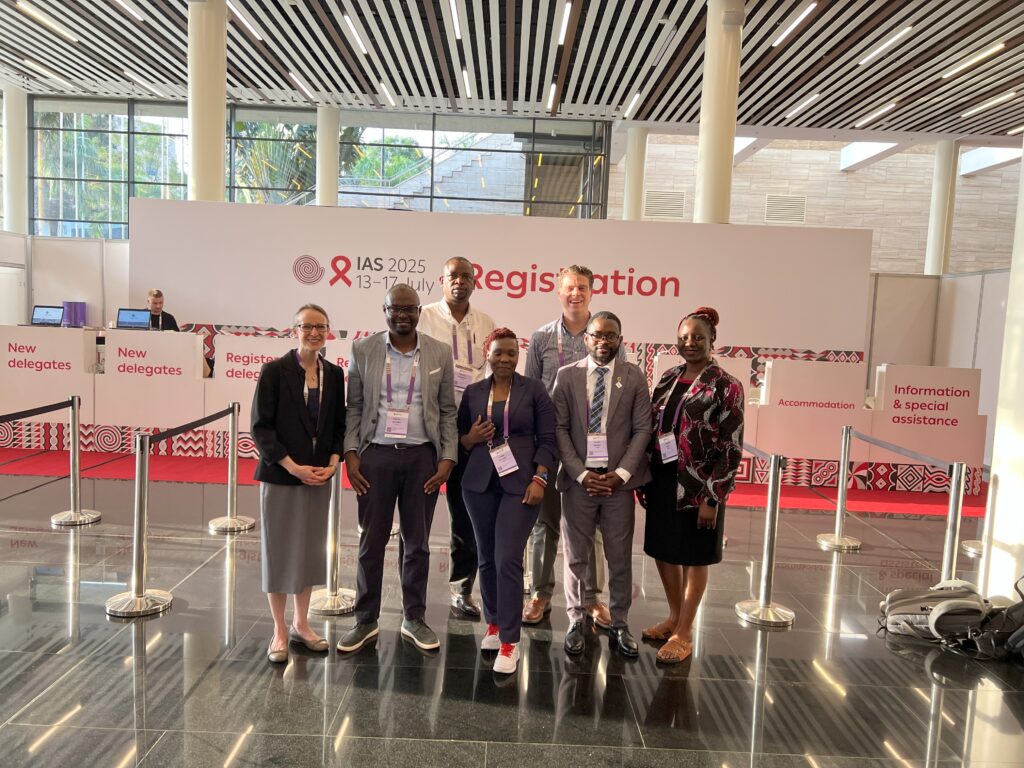
The 13th International AIDS Society (IAS) Conference on HIV Science, held from 13 to 17 July 2025 in Kigali, Rwanda, featured over 142 oral abstract presentations and more than 1,400 posters, with around 600 presented in person. The conference highlighted groundbreaking discoveries, innovations, and insights from across Africa and beyond that are shaping the global HIV response.
The Centre for Infectious Disease Research in Zambia (CIDRZ) was among the key contributors to this year’s conference, continuing to play a leading role in global scientific dialogue. Through a series of presentations, CIDRZ shared impactful research and programmatic experiences, reaffirming its commitment to evidence-based approaches in HIV prevention, care, and treatment.
Dr Sydney Mwamba, from CIDRZ, presented key findings from a study titled “Scaling Up Advanced HIV disease (AHD) Screening, Diagnosis, and Management in 2023 – Implementation of the Hub-and-Spoke Model in Lusaka Province, Zambia.”
The poster presentation showcased the successful scale-up of Advanced HIV Disease (AHD) services across Lusaka Province in 2023, led by the Lusaka Provincial Health Office (LPHO) with technical support from CIDRZ. The intervention utilised a WHO-recommended hub-and-spoke model, rolled out in 193 health facilities, including 11 referral hubs and 182 spoke sites.
This implementation significantly increased AHD screening coverage, with rates improving from 42% in October 2023 to 69% by September 2024. The presentation also underscored the critical role of strengthening TB and cryptococcal diagnostics in averting AHD-related morbidity and mortality.
Key lessons included the importance of regular mentorship, data-driven decision-making, and ensuring a consistent supply of essential diagnostics and treatment commodities. The model demonstrated strong potential for scalability and replication in other high-burden settings, offering a pathway to strengthen AHD care across similar health systems.
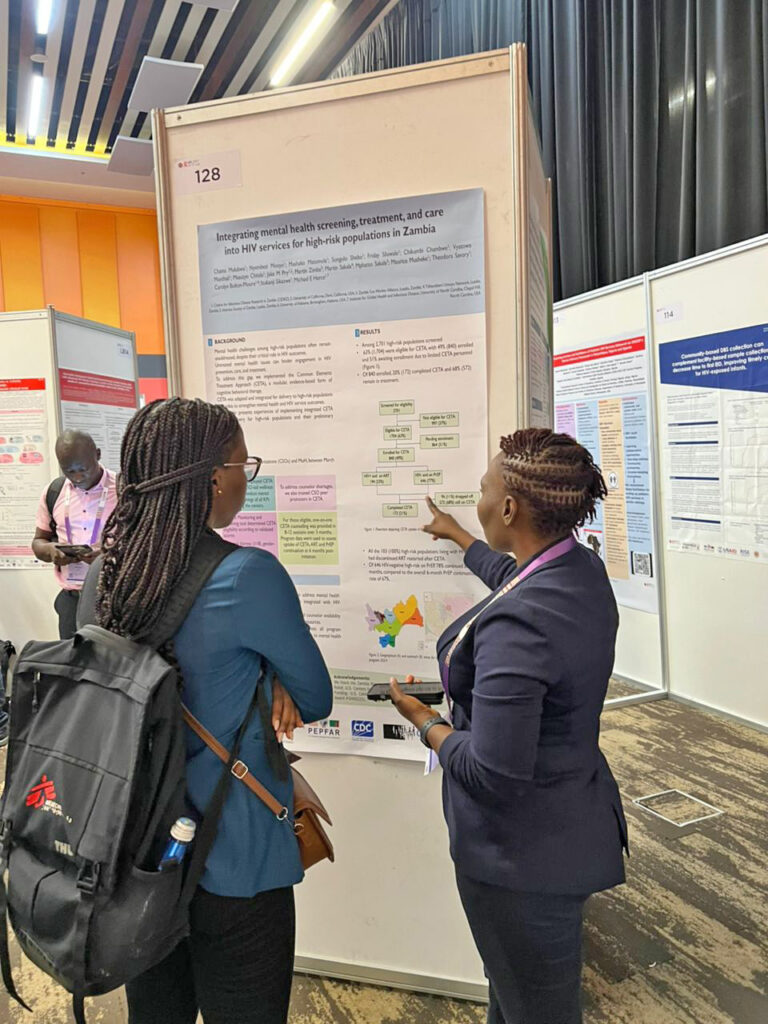
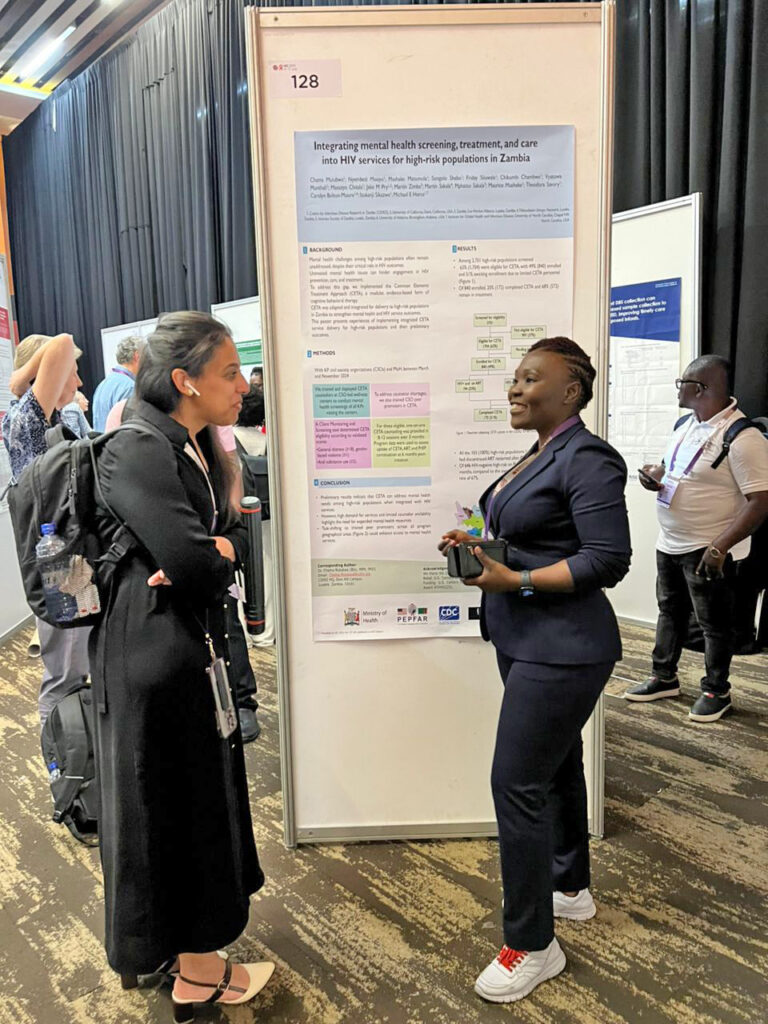
Meanwhile, CIDRZ’s Chama Mulubwa delivered a presentation on “Integrating Mental Health Screening, Treatment, and Care into HIV Services for High-Risk Populations in Zambia.”
The study showcased the application of the Common Elements Treatment Approach (CETA) to bridge mental health and HIV care, addressing the often-overlooked psychological needs of key populations. The findings point to the potential of integrated models in improving overall health outcomes and service uptake.
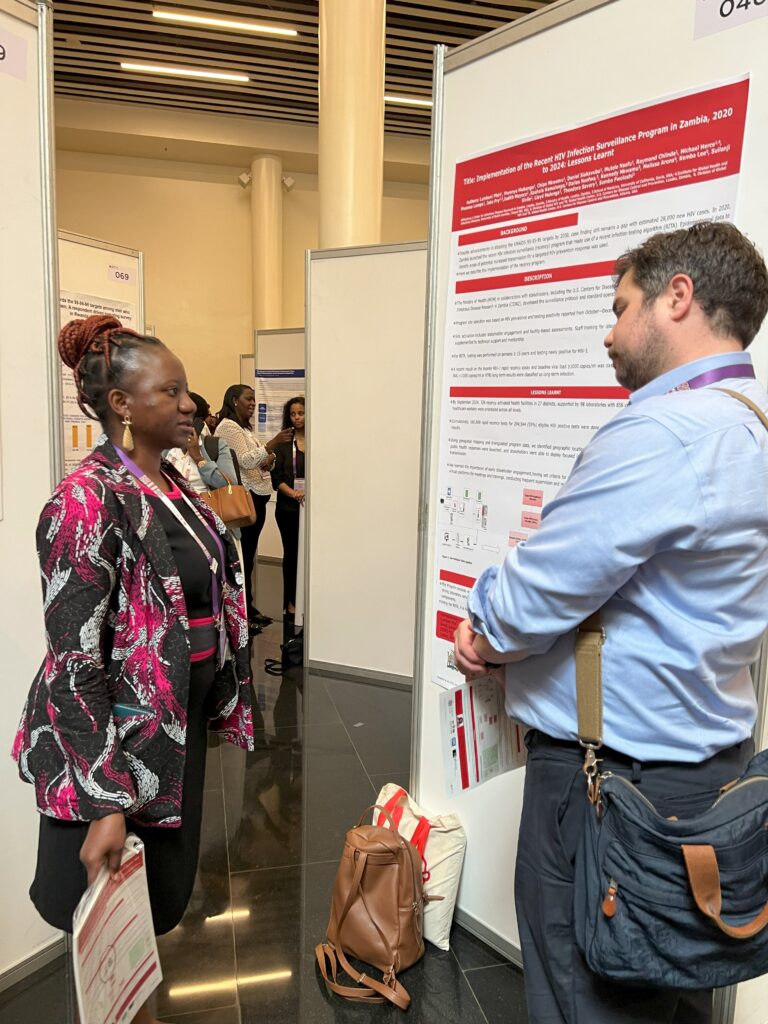
And Lumbani Phiri shared findings from the study “Implementation of the Recent HIV Infection Surveillance Programme in Zambia (2020–2024): Lessons Learnt.” The presentation explored Zambia’s journey in establishing the surveillance programme, highlighting practical lessons, challenges encountered, and how the initiative has informed national HIV response strategies.