Strengthening Zambia’s Food Systems through One Health: Insights from the One Health Baseline Research Study.

CIDRZ Strengthens Research Staff Capacity in Infection Prevention and Control (IPC).
January 15, 2026
CIDRZ Strengthens Staff Capacity in Informed Consent and Research Ethics.
January 21, 2026
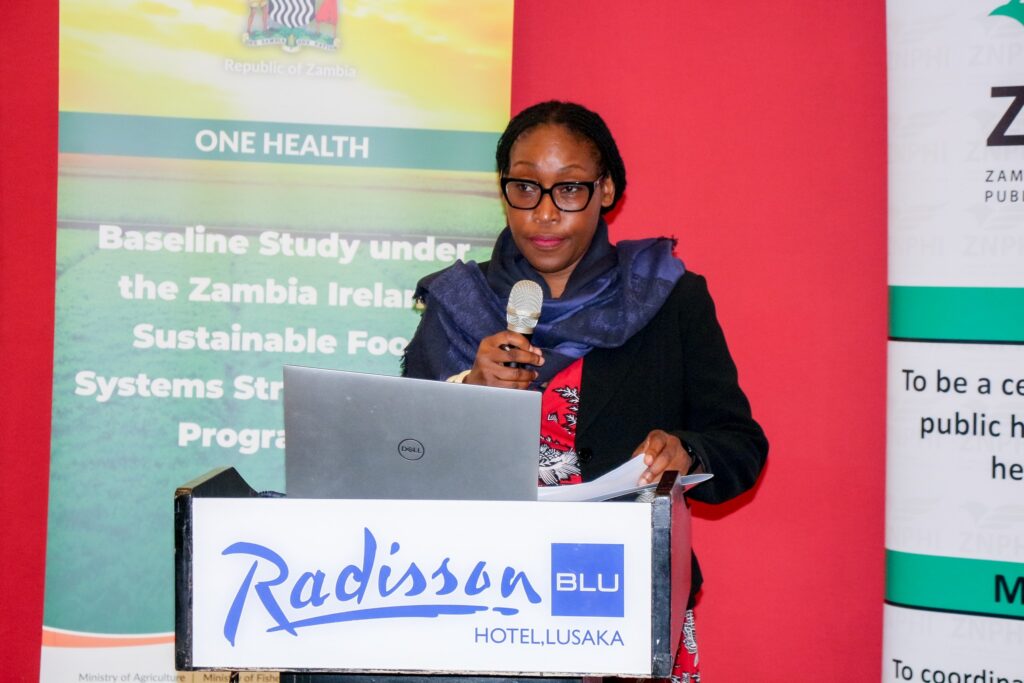
The Centre for Infectious Disease Research in Zambia (CIDRZ), with support from Sustainable Food Systems Ireland (SFSI), recently led a comprehensive One Health (OH) Baseline Research Study in collaboration with the Zambia National Public Health Institute (ZNPHI), Ministry of Agriculture (MoA), Ministry of Fisheries and Livestock (MFL), Ministry of Health (MoH) and Lusaka City Council (LCC).
The study aim was to understand knowledge and practices related to food safety, animal disease surveillance, the regulation of animal medicines, and the broader One Health system in Zambia.
The study aims to support a just transition toward a sustainable food system by promoting interventions that increase resilience to production and consumption shocks while reducing the risk of crises along the farm-to-fork continuum.
The research was carried out in six districts, namely Chipata in the Eastern Province, Lusaka in Lusaka Province, Lunte and Luwingu in the Northern Province, and Namwala and Pemba in the Southern Province.
A total of 130 small- and medium-sized livestock and crop farmers, 130 food processors, 40 buyers and retailers, and 40 regulators participated, providing both quantitative and qualitative insights.
The findings reflect a holistic understanding of One Health, revealing that stakeholders recognise the interconnections between food safety, animal health, disease surveillance, and veterinary medicines.
Respondents highlighted that a stable political economy, appropriate legislation, infrastructural support, access to education and training, and adherence to principles such as integrity, fairness, and transparency are essential for sustaining these systems.
The study also revealed several positive outcomes in Zambia’s implementation of One Health principles. Most livestock farmers demonstrated considerable knowledge of zoonotic diseases, while food businesses largely complied with registration rules and reported that food safety management systems contributed to better product pricing.
Regulators acknowledged the importance of inter-ministerial collaboration, and livestock farmers expressed satisfaction with veterinary support following disease reporting.
Despite these successes, the study identified persistent challenges, including insufficient regulatory oversight, misuse of veterinary drugs, limited access to quality inputs such as vaccines and certified seeds, and inadequate infrastructure for storage, transportation, and food safety compliance.
Institutional progress in Zambia has been notable, with the Zambia National Public Health Institute Act of 2020 and the National One Health Strategy (2023–2026) providing a legislative framework to strengthen coordination and capacity among human, animal, environmental, and wildlife health sectors.
However, farmers and food businesses raised concerns about limited field-level support, overlapping regulatory mandates, and political interference, which undermine compliance and enforcement. Stakeholders emphasised the need for structured communication channels, training, and awareness programmes to ensure policies are practical, locally relevant, and effectively implemented.
The study highlighted the importance of risk-based solutions in managing threats to human, animal, and environmental health. Participants expressed interest in learning and applying strategies to mitigate risks, including proper pest management and disease prevention, as well as safe handling of food and livestock. Tools like the Zambia Animal Health Information System (ZAHIS) demonstrate the potential of digital platforms to improve disease surveillance, enable rapid risk assessment, and support informed decision-making along the agricultural value chain.
In addition, respondents identified opportunities to strengthen Zambia’s economic ecosystem through decentralised services, renewable energy for cold storage, improved access to government contracts for smallholders and SMEs, and enhanced public-private partnerships. By investing in research, innovation, infrastructure, and inclusive stakeholder engagement, Zambia can build a resilient, sustainable, and economically viable food system that benefits communities nationwide.
The One Health Baseline Study underscores that achieving sustainable food systems in Zambia requires an integrated approach that combines institutional strengthening, policy coherence, risk-based management, and community engagement. By addressing systemic gaps and leveraging ongoing progress, Zambia can enhance food safety, animal health, and agricultural sustainability, ultimately supporting resilient livelihoods, public health, and long-term development.